주독대사관은 본(Bonn) 시를 남북으로 관통하는 코블렌처 슈트라쎄(Koblenzer Strasse)의 대로변 124번지에 위치한 붉은 벽돌로 된 3층집으로 큰길 건너 대각선의 위치에 독일 외무성이 자리 잡고 있어 외무성 사람들은 자기들과 제일 가까운 대사관이라고 말하고 있었다.
독일은 제2차 대전의 전패국으로 동서독으로 분단 점령되었을 뿐만 아니라 나치스의 전쟁 범죄에 대한 책임감으로 인하여 아데나워(Adenauer)정부는 연합국에 대하여 모든 면에서 순응 복종하는 태도를 취하고 있었으며 한국에 대하여도 우호적인 정책을 견지하였다.
당시 서독에 있는 교포로서는 광부와 간호원 모집에 응하여 와서 일하고 있는 젊은이들이 많아 이들과 유학생이 주류를 이루고 있었다. 이 밖에 개인 자격으로 와서 살고 있는 극소수의 인원이 각지에 산재해 있었다.
하루는 윤이상(尹伊桑)이라는 교포가 찾아와서 자기를 작곡가라고 소개한 후 서독정부는 음악가, 화가 등 예술인에게 보조금을 지급하여 문화, 예술을 장려하고 있는데 어째서 한국정부는 예술인에게 보조금을 지급하지 않느냐고 질문을 하였다. 나는 그에 대하여 ‘한국은 6․25전쟁으로 국토가 많이 파괴되고 경제가 파탄에 이르러 전 국민이 최저 생활에 허덕이고 있으며 UN 기타 우방의 구호와 원조에 의존하는 형편’이라고 말하고, ‘정부가 지금 전후 복구와 경제 발전에 전력을 경주하고 있으니 우리 경제가 나아지면 국민이 세금도 더 낼 수 있게 될 것이고 그렇게 되면 그 돈으로 문화 발전에도 힘을 쓸 수 있을 것이니 그때까지는 전 국민이 참고 노력하여야 할 것’이라고 하였다.
또한, 서독정부와 비교를 하였으나 서독은 패전 후 전 국민이 이를 악물고 오직 경제 재건과 발전을 위하여 근검절약하여 라인강의 기적을 이룬 것이 아니냐, 우리도 독일의 이런 점을 배워야 한다, 그리고 독일은 6 ․ 25전쟁 같은 전쟁을 겪지 않았기 때문에 덮어놓고 독일과 비교할 수는 없지 않은가, 라고 간곡히 설명하였다. 그러나 그는 납득이 되지 않는다는 얼굴을 하며 물러갔다.
7월에 신응균(申應均) 장군이 대사로 임명되어 부임하였다. 이 분은 그때 처음 만나는 분이었으나 다재다능하고 성격이 부드러워 곧 원만한 관계를 설정할 수 있었다.
|
|
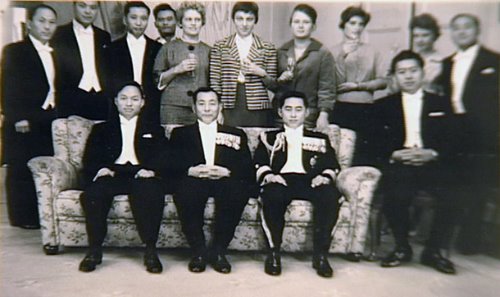
| ▲ 독일대사관 근무 시절 / 앞줄 나의 옆 가운데가 신응균 대사다 |
|
12월 11일 정내혁(丁來赫) 상공부장관이 방문하여 기술 원조, 개발 차관, 상업 차관을 교섭하였다. 이 기회에 몇 군데 독일 공장을 시찰하였는데 나는 독일 노동자들의 일에 대한 열중(熱中) 태도에 깊은 감명을 받았다. 이렇게 열심히 일하는데 경제가 발전하지 않을 수 있겠는가. “독일 사람들은 일하기 위하여 사는구나!” 감탄을 금할 수 없었다.
또 하나, 독일 사람들의 성격에 관하여 느낀 점은 그들이 규칙과 기율(紀律)을 좋아하고 힘을 숭상한다는 것이다. 그들이 제일 좋아하는 국민은 2차 대전의 동맹국이라는 인연도 있겠지만 일본 사람이다. 이러한 성격의 이면으로서 약한 사람, 불쌍한 사람에 대한 동정심은 박약하다. 인간주의적, 문화적 여유가 희박한 대신 정직하고 진지하며 의무감에 강한 것이 국민성의 특성으로 느껴졌다.
우리 대사관이 노력한 일 가운데 하나가 한국의 문화를 독일에 소개하는 사업이었다. 당시 한국은 독일의 일반 대중에게 거의 알려지지 않은 상태에 있었다. 1962년 2월 28일 프랑크푸르트(Frankfurt)대학에 이조실록을 포함한 167권의 도서를 기증하였다. 또한 3월 1일부터 4월 15일까지 슈태델(Staedel)문화원에서 한국문화재 전시회를 개최하여 한국문화를 널리 소개하였다.
<프랑크푸르트 대학에 도서 기증할 때 한 연설>
Feb 28, 1962
Your Magnificence, Ladies and Gentlemen,
It is my great pleasure to present on behalf of the Government of Korea 167 books as a donation to the Ostasiatische Seminar of the University of Frankfurt. I would like to first of all thank Prof. Dr. Karo and Mr. Hyong Kon Han who have assisted us in making this presentation today possible.
For a long time Korea has remained a relatively unknown country to the Western countries including Germany. Only a limited number of scholars and student took interest in Korea and Korean culture and made devoted efforts to introduce Korea to the people of Germany. Thanks to these pioneers, among them are Prof. Karo and Prof. Eckardt, there are now four Universities in Germany which have courses in Korean language. It is very gratifying that the interest in Korea is growing in this country, not only in the political and economic circles but also in cultural and social fields as well.
As one example of such interest I may mention the exhibition in this city of Korean Art Treasures which will be held from March 1 to April 15 at the Staedel Kunstinstitut. These are objects toured a few years ago through the United States of America, and since 1960 they are touring the European countries contributing greatly to the understanding of Korean culture by the Western people. I hope and I am sure that it will make an equal success in Germany as it did in the other Western countries.
The books under donation are on various subjects covering an extended period of time as you already may know. They include the records of the Yi Dynasty consisting of 48 volumes. The present cannot be properly understood without knowing the past. I am sure through these records and others you will be able to understand our people better.
Your Magnificence, I am most grateful for the keen interest which your great University has in my country. The small donation today is a humble expression of our appreciation for your valuable efforts for the study of Korea. This is, I hope, only the beginning and one of the many cultural exchanges between our two countries. May I express my sincere hope that the Frankfurt University will be the center of Korean study in the Federal Republic of Germany. It is also my desire to see a Korean―German Association be founded soon with the membership of all the people in this country who are interested in Korea and its people. Through such mutual efforts the friendship and the understanding between out two peoples will be greatly furthered.
Thank you.


